
Blog / Jacksonville MINI Service

MINI Oil Change: Synthetic Oil and BMW Longlife Explained

A MINI oil change is straightforward when the correct oil specification is used and more complicated when it isn't. The specification question comes up at every service interval, and the answer has real consequences for engine longevity. Jacksonville MINI Cooper drivers who know what their engine requires are in a better position at every service appointment. This breakdown covers the BMW Longlife standard, how it maps to specific MINI engines, and what to verify at every service. 

Why MINI Cooper Oil Specification Is Not Optional 

Not all synthetic oils are equal. A full synthetic label on a bottle confirms the oil's base stock origin. It says nothing about whether the oil meets the thermal stability, shear resistance, and oxidation thresholds MINI engines require. BMW developed the Longlife specification to define those thresholds precisely. An oil that carries BMW Longlife certification has passed testing for those properties. One that hasn't may still be labeled full synthetic and still fail to protect a MINI engine at operating temperature. 

In practice, the mechanical consequence of using non-certified oil shows up in two ways. First, oil that lacks the correct shear stability breaks down faster under the pressure and heat of normal engine output. Second, in a turbocharged engine, oil that degrades prematurely leaves the turbocharger bearings without adequate lubrication at high shaft speeds. Neither consequence is immediate or obvious. However, the cumulative effect across multiple non-compliant services accelerates wear in ways that a certified oil would not. 

Beyond engine wear, using non-certified oil can also affect warranty coverage. MINI's powertrain warranty requires manufacturer-specified fluids. A dealer inspection that finds evidence of non-compliant oil use has grounds to decline a warranty claim on related components. That risk makes specification compliance a real matter at every service, not just a preference. 

What Is the BMW Longlife Specification and Which MINI Engines Require It? 

However, BMW Longlife is a proprietary certification standard, not a marketing term. It defines the minimum thresholds an oil must meet to protect BMW and MINI engines across extended service intervals. The certification covers viscosity stability under shear, high-temperature oxidation resistance, and low-temperature pumpability. It also tests compatibility with catalytic converter and emissions systems. An oil that passes all of those tests earns Longlife approval. One that skips any test does not carry the certification, regardless of how it is marketed. 

Two primary specifications apply across the MINI lineup. The distinction matters when selecting the correct product: 

  • BMW Longlife-01 applies to most naturally aspirated MINI Cooper engines in older model years and select current configurations. It specifies a 5W-30 viscosity and is formulated for engines without a diesel particulate filter. Most base MINI Cooper Hardtop owners in model years prior to the current turbocharged generation will fall under this specification. 
  • BMW Longlife-04 applies to turbocharged MINI Cooper S engines and current generation models with direct injection. It also specifies a 5W-30 viscosity but includes additional low-SAPS requirements that protect the catalytic converter and diesel particulate filter components on compatible vehicles. MINI Countryman owners with turbocharged engines should confirm which specification their model year requires. 

So the model year and engine code on the vehicle determine which specification applies. At Tom Bush MINI in Jacksonville, the service team identifies the correct specification before the service begins. That removes the guesswork entirely. 

What the CBS Oil Monitor Is Measuring 

In contrast to a simple mileage counter, the Condition Based Service system in a MINI Cooper does not count miles. Instead, it reads a set of vehicle inputs and calculates an estimated oil quality level in real time. Those inputs include engine temperature cycles, RPM patterns, trip duration, load demand, and elapsed time since the last service reset. The system uses those factors to model how much the oil has degraded from its baseline state. 

That approach is more precise than a fixed mileage interval because it responds to real driving patterns. However, it also means the CBS monitor's output varies by driver. A Jacksonville driver on frequent short trips at high ambient temperatures will see the oil indicator appear sooner than a driver on longer highway trips. Short trips prevent the engine from reaching full operating temperature. Fuel dilution and moisture then accumulate in the oil without burning off. 

Still, the CBS system does not distinguish between compliant and non-compliant oil. If non-certified oil was used at the last service, the monitor continues calculating as if the correct oil is in place. The system has no way to detect oil quality at the chemical level. So a MINI that received the wrong oil will show a normal CBS countdown even as the oil degrades faster than the model predicts. That is one reason why oil specification verification matters at every service, not only at the dealer. 

When to Service Before the CBS Reminder 

Jacksonville's heat and stop-and-go traffic patterns put more demand on oil than the CBS baseline assumptions account for. Drivers logging significant city miles in summer months may want to check in with Tom Bush MINI before the CBS reminder appears. That is worth doing if the previous service used an oil of unknown specification. A proactive service at a slightly earlier interval costs less than addressing accelerated wear later. 

What Turbocharged MINI Engines Demand From Oil 

A turbocharger spins at speeds between 100,000 and 200,000 RPM during normal operation. At those speeds, the bearing that supports the turbo shaft relies entirely on an oil film to prevent metal-to-metal contact. That film must maintain its viscosity and lubrication properties at temperatures that exceed what the rest of the engine sees. When oil degrades or lacks the correct thermal stability, that film thins. At high shaft speeds, a thinned film allows micro-contact between the shaft and bearing surface. That wear compounds with each subsequent heat cycle. 

By contrast, a naturally aspirated MINI Cooper engine does not impose the same thermal load on its oil. The oil circulates through a lower-pressure, lower-temperature setting and degrades more slowly under normal driving. As a result, non-certified oil causes less immediate wear in a base Hardtop than in a MINI Cooper S. However, neither engine is tolerant of extended intervals or degraded oil. The Cooper S simply shows the consequence faster and more visibly. 

Furthermore, direct injection adds another variable. In a direct-injection engine, fuel is injected directly into the combustion chamber rather than the intake port. That design raises combustion efficiency but allows more unburned fuel to pass the piston rings and enter the crankcase. That process is called blow-by. Blow-by dilutes the oil across multiple services. An oil with the correct shear stability resists degradation from fuel dilution better than a non-certified product at the same viscosity grade. 

What Jacksonville MINI Drivers Should Know Before Every Oil Service 

So knowing the correct specification is the first step. Verifying that the shop used it is the second. At Tom Bush MINI, the specification is confirmed and logged with every service record. That creates a documented compliance trail the vehicle carries forward. At an independent shop, the driver needs to ask directly. Several things are worth confirming before authorizing any MINI oil service. 

  • Ask for the oil brand and product name, then verify that it carries BMW Longlife-01 or Longlife-04 certification. Certification is printed on the bottle and is verifiable on the BMW approved lubricants list. A shop that cannot name the specific product or certification is not a reliable choice for a MINI service. 
  • Confirm the viscosity grade matches the specification for the model year and engine. For most current MINI Cooper and MINI Cooper S models, the correct viscosity is 5W-30. Using a 5W-40 or 0W-40 that is not BMW-certified does not substitute for the correct specification, even if the viscosity appears similar. 
  • Ask whether the CBS system will be reset after the service. A service that does not include a CBS reset leaves the monitor running on incorrect data, which shifts the next service interval calculation. 

The cost difference between a certified oil service at Tom Bush MINI and a non-certified service at a quick lube shop is smaller than most drivers expect. The cost of accelerated turbocharger wear or a declined warranty claim is not. 

Posted in:

Related Posts

MINI service prices

MINI Service Prices and Repair Estimate Review Guide

MINI service prices are easier to review when each estimate line explains diagnosis, labor, parts, maintenance, and repair separately. Therefore, a written estimate should show what the technician found and what work is proposed. Therefore, you can review each item before giving approval. That process also makes it easier to ask clear questions about timing, coverage, and service offers. How to Read a MINI Service Estimate What are you paying for on a MINI service estimate? The estimate should separate testing, technician time, parts, planned maintenance, and repair work. In addition, each category represents a different part of the service visit. Therefore, reviewing the estimate line by line gives you a clearer view of the proposed work. Diagnostic testing covers the time used to isolate a fault. Labor covers the time needed to complete the repair or service. Furthermore, parts cover the components, fluids, filters, or hardware listed for the job. In addition, scheduled maintenance may appear beside repair work during the same visit. Before approving the estimate, review these categories: Ask what testing supports each repair recommendation. A clear answer should connect the proposed work with a finding from the inspection or diagnostic process. Check whether labor and parts are listed separately. This makes it easier to see where the total comes from. Ask whether each item is scheduled maintenance, current repair work, or a recommendation for a later visit. Timing should be clear before approval. A well organized estimate should make the work easier to follow. Therefore, you should not need to guess why a line item appears. Diagnostic Charges Cover Fault Isolation Why can diagnosis carry its own charge before repair pricing is final? Diagnostic work pays for the testing needed to identify the source of a fault. However, a warning light or stored code may narrow the search, but it may not identify the failed component. MINI technicians can review fault memory, live data, electrical readings, and communication between control modules. In addition, a road test may be needed when a concern appears only while the car is moving. Therefore, each step adds evidence before parts are replaced. For this reason, diagnosis and repair are separate stages. The first stage identifies what is wrong. The second stage uses that finding to price the needed work. Therefore, a diagnostic charge does not mean the same work is being billed twice. Ask what the testing confirmed before approving the repair. The service team should be able to explain which finding led to the recommendation. Labor and Parts Explain Different Parts of the Job Why can labor cost more than the replacement part? Labor reflects the time and steps needed to reach, remove, install, test, and verify the component. However, a small part can sit in an area that takes more time to access. MINI models also use electronic controls that may need programming, calibration, or final checks after installation. Therefore, the labor line can include more than physical removal and replacement. Some repairs also require trim, covers, or nearby components to be moved first. In addition, parts pricing reflects the components used in the job. That may include the main replacement part plus seals, fasteners, fluids, or related hardware. In addition, the exact MINI model and drivetrain can change the part number. When reviewing the estimate, ask what the labor time covers and which parts are included. That gives you a cleaner view of the total before approval. Routine Maintenance and Repair Work Need Separate Review Is every line item on the estimate a repair? No. A service visit can include scheduled maintenance and repair work at the same time. Therefore, scheduled maintenance follows a planned service schedule. Oil service, brake fluid, filters, and inspection items can fall into that category. By contrast, repair work responds to a confirmed fault, measured wear, damage, or a failed component. For this reason, this distinction matters when you review coverage. New MINI vehicles include scheduled maintenance for a stated time and mileage window. Warranty coverage follows separate rules. Maintenance plans and service contracts can also use different terms. Therefore, ask which category applies to each line item. A maintenance item may follow a normal service interval. A repair item should connect to a finding from the inspection or diagnostic process. Keeping those categories separate also makes future planning easier. You can see which work belongs to the current visit and which service will return on a later schedule. Decide What Needs Attention Now and What Can Wait Which recommendations need attention first? The answer should come from safety, active faults, measured wear, and the technician's findings. Some items may need prompt attention because they involve braking, steering, cooling, electrical faults, or another active concern. However, other items may have remaining service life and can be planned for a later visit. Therefore, ask the service advisor to explain the timing for each recommendation. In addition, ask what was measured and observed. Then ask what could happen if the work is delayed. It should also explain whether the item has a clear service limit or inspection result behind it. Therefore, this approach does not require you to diagnose the MINI yourself. Instead, it gives you a structured way to review the recommendation before approval. If several items appear on one estimate, ask the advisor to separate them by timing. That can make a larger service visit easier to plan without losing sight of the most pressing work. Check Coverage Specials and Approval Details What should you verify before approving the estimate? Review coverage, current service offers, the total amount, and the work that will be completed. First, ask whether any line item may fall under active MINI coverage. This may include warranty, scheduled maintenance, Maintenance+, or a service contract. Each program has its own terms. Therefore, coverage should be checked against the exact MINI and current plan. Next, review current Tom Bush MINI service and parts specials. However, offers can change and may apply only to certain services or dates. For this reason, ask whether a current offer applies before the work begins. Also confirm what happens if the technician finds another issue after disassembly. Therefore, you should know whether new work requires separate approval before the total changes. In addition, ask which recommendations can be planned for a later visit. Tom Bush MINI service in Jacksonville can review the estimate with you before work begins. Bring questions about the findings, timing, coverage, and current offers to that conversation. A clear estimate should leave you knowing what is being done, why it is being done, and what you approved.

MINI Brake Service Near Me: Pads and Rotors Explained

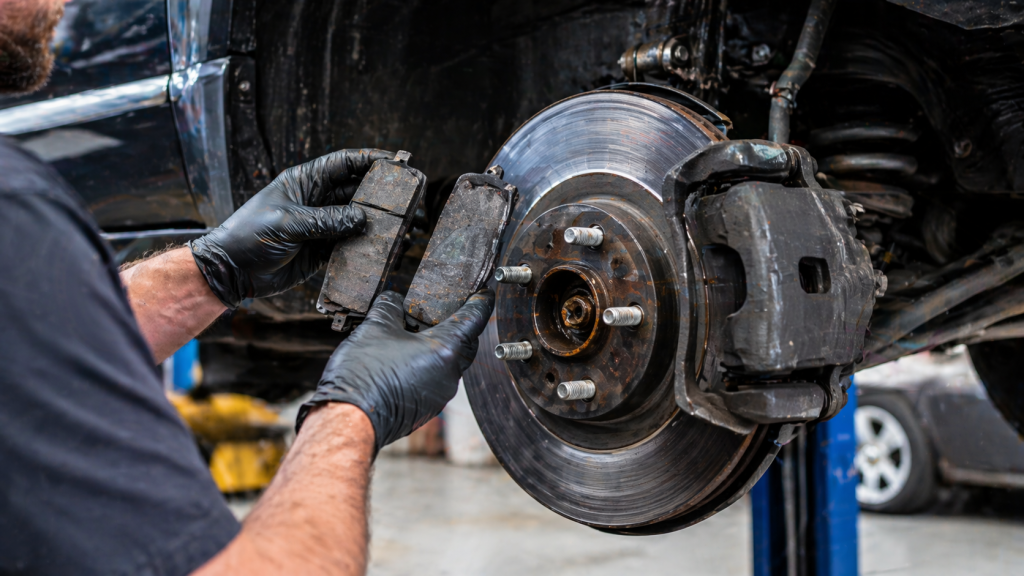
MINI brake service near me is one of the most urgent searches a driver makes. The answer starts with reading the right signals before the brake warning light appears. Some of those signals are obvious. Others are easy to miss until the situation becomes more urgent and more costly. Jacksonville MINI Cooper drivers who know what to watch for are in a better position at every inspection. This breakdown covers how the brake wear system works, what the warning signs look like, and what a complete service at Tom Bush MINI involves. How Does the MINI Cooper Brake Wear Sensor System Work? The MINI Cooper uses an electronic brake pad wear sensor embedded in the brake pad itself. As the pad material wears down, the sensor wire eventually contacts the rotor surface. That contact completes a circuit and triggers the brake warning light on the dashboard. The warning appears while usable pad material still remains. That gives the driver a service window rather than an immediate stop-drive situation. However, that service window is not unlimited. The warning indicates the pad has reached a thickness where replacement should happen within the next few hundred miles. Continuing to drive past that point risks wearing the pad completely through to the metal backing plate. Metal-to-metal contact between the backing plate and the rotor causes rapid rotor damage. That turns a pad replacement into a rotor replacement as well. more The sensor is a single-use component. Once it contacts the rotor and triggers the warning, it requires replacement along with the pads. At Tom Bush MINI in Jacksonville, the service team replaces the sensor as part of every pad replacement. That ensures the warning system is fully functional for the next service cycle. Signs Your MINI Cooper Brake Pads Need Attention Before the Light Appears The brake wear sensor is not the only signal available. Several indicators appear before the warning light activates, and recognizing them early gives Jacksonville drivers more options. A MINI Cooper approaching the end of its pad life communicates that through sound, feel, and appearance. The most common pre-warning signals worth monitoring are: A high-pitched squeal during normal braking is the most recognizable early indicator. Most brake pads include a soft metal wear tab that contacts the rotor as the pad thins. That contact produces a squealing sound intended to prompt a service appointment before the electronic sensor triggers. A grinding noise during braking is a more urgent signal. Grinding indicates that the pad has already worn through to the backing plate, or that debris has lodged between the pad and rotor. Either situation warrants an immediate inspection at Tom Bush MINI rather than a scheduled appointment. Increased brake dust on the front wheels of the MINI Cooper can signal an accelerating wear rate. Front brakes carry most of the braking load and produce more dust as they approach the end of their service life. A sudden increase in dust accumulation on the alloy wheels is worth noting. Beyond sound and appearance, pedal feel also changes as brake components wear. A pedal requiring more travel before the brakes engage, or one that feels soft compared to normal, points toward pad wear or brake fluid degradation. Both warrant an inspection before the next scheduled service. When Do Rotors Need Replacement Alongside the Pads? Rotor evaluation happens at every brake service and is not a separate decision from pad replacement. MINI sets a minimum thickness specification for each rotor. That number defines the thinnest the rotor can safely be machined or worn to. Once a rotor reaches that specification, it no longer has enough material to absorb and dissipate braking heat without warping. At that point, replacement is required regardless of surface appearance. However, a rotor that is still above minimum thickness can still warrant replacement. Heat cycling is the reason. Every time a MINI Cooper brake is applied, the rotor absorbs heat and then cools as the vehicle slows. Repeated heat cycles cause microscopic stress in the rotor metal. Across many miles, that stress produces variations in rotor thickness called lateral runout. A measurement tool reveals this even when the surface looks acceptable. A rotor with significant lateral runout causes brake pulsation, which feels like a rhythmic vibration through the pedal during braking. New pads on a distorted rotor will not resolve pulsation. New pads on a distorted rotor transfer heat unevenly and wear faster than they would on a flat surface. So the rotor evaluation is not an upsell. It is a necessary step toward a brake service that resolves the problem rather than postponing it. How Jacksonville Driving Accelerates Brake Wear on a MINI Cooper Highway miles are easier on brake pads than city miles. On the highway, a driver applies the brakes far less often and relies more on engine deceleration and gradual speed reduction. Each brake application generates heat, and heat is what degrades pad and rotor material across the ownership period. Jacksonville's traffic pattern is the opposite of that. Stop-and-go driving on I-95, Philips Highway, and the beach corridor puts the brakes to work repeatedly across short distances. A MINI Cooper Hardtop in Jacksonville may accumulate brake cycles at two to three times the rate of one driven primarily on highway routes. As a result, a Jacksonville driver who expects 50,000 miles from a set of pads may find them reaching service condition closer to 30,000 miles. The MINI Cooper S adds weight to this equation through its higher power output and the driving style it encourages. Harder acceleration leads to harder braking. The MINI Countryman, with its additional vehicle weight, puts more load on the braking system at every stop. Both models warrant brake inspections at shorter intervals than the base Hardtop in Jacksonville traffic. What to Expect From a MINI Brake Service Near Me at Tom Bush MINI A complete MINI brake service is not the same as a pad replacement. Pad replacement addresses the friction material. A complete service also addresses the components that govern how well those new pads function. At Tom Bush MINI, the brake service process includes evaluation of each component before any parts are replaced. That gives the driver a clear picture of what needs attention and what does not. Several items are part of a thorough brake service. Brake pad replacement with OEM-specified pads and new wear sensors on each serviced axle. Aftermarket pads can fit a MINI Cooper, but OEM-specified pads are matched to the rotor metallurgy and CBS brake wear calculation that MINI programs into the vehicle. Rotor measurement and inspection against MINI minimum thickness specifications, with replacement when measurements fall at or near the limit or when lateral runout is present. Brake caliper inspection to confirm the caliper slides and pistons are moving freely. A seized caliper causes uneven pad wear and accelerates the return to service. Brake fluid condition check, with a moisture content test to confirm whether a fluid flush is appropriate. MINI recommends brake fluid service on the CBS schedule, and Jacksonville humidity accelerates moisture absorption in brake fluid. The cost of a complete brake service at Tom Bush MINI varies by axle and by which components require replacement. A front axle pad and rotor replacement is the most common service combination. The team walks through the inspection findings and explains each item before any work begins. The driver knows exactly what the service covers and why.

How Long Does a MINI Cooper Last? Mileage and Ownership Costs

How many miles a MINI Cooper lasts comes down to one thing more than any other: how well it was serviced. That answer surprises some drivers who assume longevity is mostly about the car itself. However, the maintenance record tells more about a MINI's future than its age or odometer reading. Jacksonville drivers asking the question before a purchase or mid-ownership are asking the right one. This breakdown covers what the mileage ceiling looks like, what drives it, and what ownership costs across the ownership period. How Far Can a Well-Maintained MINI Cooper Go? A MINI Cooper that follows the manufacturer maintenance schedule can reach 150,000 to 200,000 miles. That ceiling is not unusual for drivers who treat service intervals as non-negotiable rather than optional. However, a MINI that missed oil changes, skipped coolant flushes, or went years between inspections hits a lower ceiling. High mileage for a MINI Cooper starts around 100,000 miles in how most sellers and shoppers evaluate used examples. That number reflects the point where deferred maintenance becomes visible in the vehicle's history. Still, 100,000 miles on a well-documented MINI Cooper with a clean service record is a stronger position than 60,000 miles on one with gaps. The odometer reading alone does not tell the full story. more The MINI Cooper S adds a turbocharged engine to the equation. Turbo engines run hotter and put more demand on oil quality. As a result, a MINI Cooper S with oil service at the correct interval will hold up well past 100,000 miles. One run on degraded oil will show wear in the turbocharger bearings and piston rings earlier than a base Hardtop. The model matters, but the service history matters more. What the MINI Maintenance Schedule Is Doing MINI uses a Condition Based Service system, called CBS, to monitor vehicle data and alert the driver when service is due. The system tracks oil quality, brake wear, coolant condition, and other inputs. It then displays a service reminder when each item reaches a threshold. That approach is more precise than a fixed mileage interval because it responds to real driving patterns. The CBS system does not eliminate the need for owner awareness. In stop-and-go Jacksonville traffic, short trips, and hot weather driving, oil degrades faster than the system's baseline assumptions account for. Moreover, some drivers see the CBS reminder and delay the appointment by weeks or months. Each delay is cumulative. A turbocharged engine running on oil past its service point loses lubrication film at high temperatures. That accelerates wear in the bearings and turbo shaft. Oil type also matters directly. MINI specifies a full synthetic oil meeting BMW Longlife standards. Using a conventional oil or a synthetic that does not meet the Longlife specification shortens the effective protection window. At Tom Bush MINI in Jacksonville, the service team uses manufacturer-specified oil on every visit. That removes the variable entirely. Coolant and Brake Fluid Intervals Two other CBS items deserve attention beyond oil. Coolant in a MINI Cooper degrades across the ownership period and loses its ability to prevent corrosion inside the cooling system. MINI recommends coolant replacement on a specific cycle, and Jacksonville's heat accelerates that degradation. A cooling system running on old coolant is more prone to water pump and thermostat issues. Brake fluid absorbs moisture and raises the boiling point threshold, which matters most during heavy or repeated braking. Following the CBS schedule for both keeps each system working as intended. The Components Jacksonville MINI Owners Should Watch at Higher Mileage As a MINI Cooper accumulates miles, certain components receive more attention from owners and technicians. Knowing which ones and at what mileage stage helps drivers plan rather than react. Jacksonville's heat and humidity add additional demand on rubber components, seals, and the cooling circuit compared to cooler climates. That context matters when setting a service priority list. At 30,000 to 60,000 miles, the focus is on brake pads, cabin air filter, and spark plugs on non-S models. The cooling system hoses and serpentine belt also warrant a visual inspection at this stage to catch early cracking from heat exposure. At 60,000 to 100,000 miles, the timing chain tensioner and water pump become relevant inspection points on higher-mileage MINI Cooper S examples. The MINI Countryman in this range warrants a transfer case fluid check if equipped with all-wheel drive. Beyond 100,000 miles, valve cover gaskets and thermostat housing seals are the most common service items on turbocharged variants. These are standard wear items at this mileage stage and are not indicators of a failing car. They are part of a normal ownership cost structure. Regular inspection at Tom Bush MINI allows the service team to identify which of these items are approaching their service point before they cause a larger issue. That approach reduces both surprise costs and downtime. What MINI Cooper Ownership Costs Look Like Year to Year Ownership cost is where MINI Coopers differ most clearly from economy cars in the same size segment. MINI parts and labor are priced at the European import level, not the domestic compact car level. A driver who buys a MINI expecting Civic-level service costs will find the comparison unfavorable. However, a driver who plans for MINI-specific service costs and follows the schedule will find the total manageable over a multi-year period. The cost structure by service stage looks like this: Annual maintenance in the first three years on a new MINI runs between $300 and $600 per year when factoring oil service, brake fluid, and cabin filter. Many new MINI purchases include a complimentary scheduled maintenance package that covers this stage. From three to six years or roughly 40,000 to 75,000 miles, annual service costs move toward $600 to $1,200 depending on what the CBS system flags and whether any wear items need replacement. Beyond 75,000 miles, the annual range widens. A MINI Cooper that has been reliably serviced will sit toward the lower end. One with deferred maintenance or a repaired turbo will sit toward the higher end. Budgeting $1,000 to $1,800 annually at this stage gives most owners a realistic planning number. Repair costs on specific items vary by model and trim. A turbocharger replacement on a MINI Cooper S is a significant service event. However, that cost is rare on engines that received oil service at the correct interval with the correct oil specification. How to Keep a MINI Cooper Running Well Past 100,000 Miles The path to a high-mileage MINI Cooper is straightforward. Follow the CBS service reminders without delay. Use only manufacturer-specified synthetic oil. Address warning lights promptly rather than waiting for the next scheduled service. Keep the cooling system on its prescribed maintenance cycle. These steps do not require unusual effort. They require reliability. Jacksonville drivers who maintain their MINI Cooper at Tom Bush MINI build a documented service history that supports reliability and resale value. A complete Tom Bush MINI service record makes a stronger used vehicle than a mix of receipts from various shops. That record tells the next owner, or the current one evaluating a trade, exactly how the car was treated. The MINI Cooper was built to go the distance. Giving it the service it needs is the part that remains in the driver's hands.