

MINI brake service near me is one of the most urgent searches a driver makes. The answer starts with reading the right signals before the brake warning light appears. Some of those signals are obvious. Others are easy to miss until the situation becomes more urgent and more costly. Jacksonville MINI Cooper drivers who know what to watch for are in a better position at every inspection. This breakdown covers how the brake wear system works, what the warning signs look like, and what a complete service at Tom Bush MINI involves.
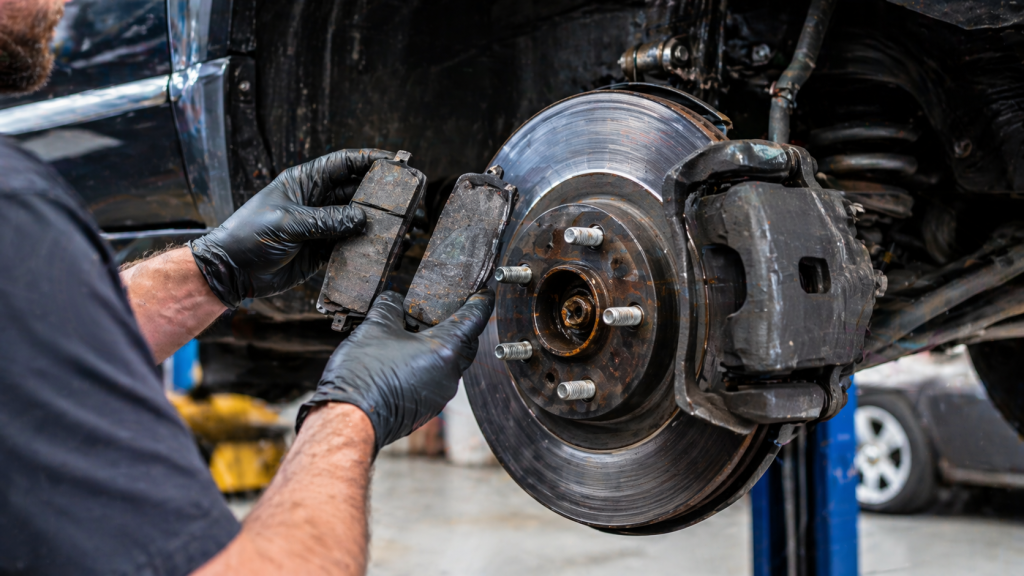
How Does the MINI Cooper Brake Wear Sensor System Work?
The MINI Cooper uses an electronic brake pad wear sensor embedded in the brake pad itself. As the pad material wears down, the sensor wire eventually contacts the rotor surface. That contact completes a circuit and triggers the brake warning light on the dashboard. The warning appears while usable pad material still remains. That gives the driver a service window rather than an immediate stop-drive situation.
However, that service window is not unlimited. The warning indicates the pad has reached a thickness where replacement should happen within the next few hundred miles. Continuing to drive past that point risks wearing the pad completely through to the metal backing plate. Metal-to-metal contact between the backing plate and the rotor causes rapid rotor damage. That turns a pad replacement into a rotor replacement as well.
The sensor is a single-use component. Once it contacts the rotor and triggers the warning, it requires replacement along with the pads. At Tom Bush MINI in Jacksonville, the service team replaces the sensor as part of every pad replacement. That ensures the warning system is fully functional for the next service cycle.
Signs Your MINI Cooper Brake Pads Need Attention Before the Light Appears
The brake wear sensor is not the only signal available. Several indicators appear before the warning light activates, and recognizing them early gives Jacksonville drivers more options. A MINI Cooper approaching the end of its pad life communicates that through sound, feel, and appearance. The most common pre-warning signals worth monitoring are:
- A high-pitched squeal during normal braking is the most recognizable early indicator. Most brake pads include a soft metal wear tab that contacts the rotor as the pad thins. That contact produces a squealing sound intended to prompt a service appointment before the electronic sensor triggers.
- A grinding noise during braking is a more urgent signal. Grinding indicates that the pad has already worn through to the backing plate, or that debris has lodged between the pad and rotor. Either situation warrants an immediate inspection at Tom Bush MINI rather than a scheduled appointment.
- Increased brake dust on the front wheels of the MINI Cooper can signal an accelerating wear rate. Front brakes carry most of the braking load and produce more dust as they approach the end of their service life. A sudden increase in dust accumulation on the alloy wheels is worth noting.
Beyond sound and appearance, pedal feel also changes as brake components wear. A pedal requiring more travel before the brakes engage, or one that feels soft compared to normal, points toward pad wear or brake fluid degradation. Both warrant an inspection before the next scheduled service.
When Do Rotors Need Replacement Alongside the Pads?
Rotor evaluation happens at every brake service and is not a separate decision from pad replacement. MINI sets a minimum thickness specification for each rotor. That number defines the thinnest the rotor can safely be machined or worn to. Once a rotor reaches that specification, it no longer has enough material to absorb and dissipate braking heat without warping. At that point, replacement is required regardless of surface appearance.
However, a rotor that is still above minimum thickness can still warrant replacement. Heat cycling is the reason. Every time a MINI Cooper brake is applied, the rotor absorbs heat and then cools as the vehicle slows. Repeated heat cycles cause microscopic stress in the rotor metal. Across many miles, that stress produces variations in rotor thickness called lateral runout. A measurement tool reveals this even when the surface looks acceptable.
A rotor with significant lateral runout causes brake pulsation, which feels like a rhythmic vibration through the pedal during braking. New pads on a distorted rotor will not resolve pulsation. New pads on a distorted rotor transfer heat unevenly and wear faster than they would on a flat surface. So the rotor evaluation is not an upsell. It is a necessary step toward a brake service that resolves the problem rather than postponing it.
How Jacksonville Driving Accelerates Brake Wear on a MINI Cooper
Highway miles are easier on brake pads than city miles. On the highway, a driver applies the brakes far less often and relies more on engine deceleration and gradual speed reduction. Each brake application generates heat, and heat is what degrades pad and rotor material across the ownership period.
Jacksonville’s traffic pattern is the opposite of that. Stop-and-go driving on I-95, Philips Highway, and the beach corridor puts the brakes to work repeatedly across short distances. A MINI Cooper Hardtop in Jacksonville may accumulate brake cycles at two to three times the rate of one driven primarily on highway routes. As a result, a Jacksonville driver who expects 50,000 miles from a set of pads may find them reaching service condition closer to 30,000 miles.
The MINI Cooper S adds weight to this equation through its higher power output and the driving style it encourages. Harder acceleration leads to harder braking. The MINI Countryman, with its additional vehicle weight, puts more load on the braking system at every stop. Both models warrant brake inspections at shorter intervals than the base Hardtop in Jacksonville traffic.
What to Expect From a MINI Brake Service Near Me at Tom Bush MINI
A complete MINI brake service is not the same as a pad replacement. Pad replacement addresses the friction material. A complete service also addresses the components that govern how well those new pads function. At Tom Bush MINI, the brake service process includes evaluation of each component before any parts are replaced. That gives the driver a clear picture of what needs attention and what does not. Several items are part of a thorough brake service.
- Brake pad replacement with OEM-specified pads and new wear sensors on each serviced axle. Aftermarket pads can fit a MINI Cooper, but OEM-specified pads are matched to the rotor metallurgy and CBS brake wear calculation that MINI programs into the vehicle.
- Rotor measurement and inspection against MINI minimum thickness specifications, with replacement when measurements fall at or near the limit or when lateral runout is present.
- Brake caliper inspection to confirm the caliper slides and pistons are moving freely. A seized caliper causes uneven pad wear and accelerates the return to service.
- Brake fluid condition check, with a moisture content test to confirm whether a fluid flush is appropriate. MINI recommends brake fluid service on the CBS schedule, and Jacksonville humidity accelerates moisture absorption in brake fluid.
The cost of a complete brake service at Tom Bush MINI varies by axle and by which components require replacement. A front axle pad and rotor replacement is the most common service combination. The team walks through the inspection findings and explains each item before any work begins. The driver knows exactly what the service covers and why.
Connect with us


