

Small car. Big decisions. When it comes to replacing parts on your MINI, the choice between OEM and aftermarket is not just about price. It is about how your MINI is designed to work and how each component fits into that experience. Every MINI is built with intention, where compact engineering meets precise performance. The parts you choose directly affect how that system behaves over time.
Understanding the difference is what turns a simple repair into a smarter ownership decision.
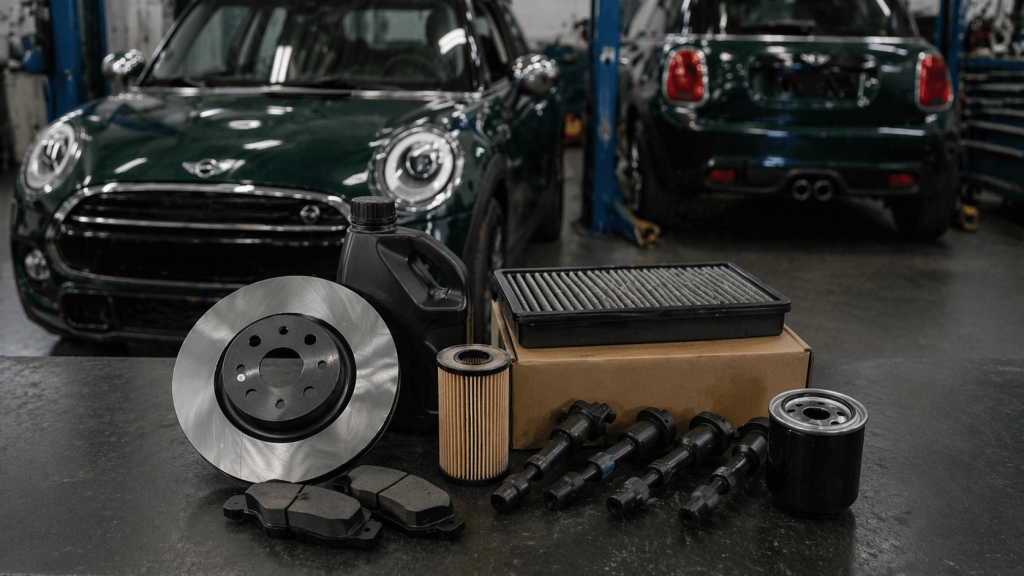
Is it better to use OEM or aftermarket MINI parts
OEM MINI parts are components built to match the exact specifications of your MINI’s original design. These parts are engineered to fit, function, and perform exactly as intended within the vehicle’s system.
MINI designs each component with tight tolerances. That means every part is shaped, measured, and tested to align with how the vehicle operates as a complete system. From engine components to sensors and braking systems, OEM parts are created to work in sync with MINI’s engineering.
This system level approach means:
- Parts fit exactly without modification
- Components interact correctly with onboard systems
- Performance remains consistent with original design
When you install an OEM MINI part, you are not just replacing a component. You are maintaining how the vehicle was designed to drive.
For Jacksonville drivers navigating city traffic, stop and go conditions, and coastal humidity, this consistency matters. It keeps your MINI feeling responsive, efficient, and reliable in everyday driving.
Are aftermarket MINI parts worth it
Aftermarket MINI parts are produced by third party manufacturers and are not built specifically to MINI’s exact engineering standards. This means quality, fitment, and performance can vary depending on the manufacturer.
Some aftermarket parts aim to replicate OEM specifications, while others prioritize cost savings. This variation creates a range of outcomes.
From a system perspective:
- Materials may differ from OEM standards
- Fitment may not be exact
- Performance may vary under real driving conditions
Because MINI vehicles rely on precise engineering, even small differences can influence how the system behaves. A component that does not align perfectly can affect performance, wear patterns, or system communication.
This does not mean all aftermarket parts are low quality. It means the consistency is not guaranteed in the same way OEM parts are.
For MINI owners, the key question is not whether aftermarket parts are cheaper. It is whether they maintain the experience your MINI was designed to deliver.
How part choice impacts long term performance
Part selection directly affects how your MINI performs over time because every component contributes to the overall system. MINI vehicles are engineered to feel agile, connected, and responsive. That experience depends on each part working within its intended parameters.
OEM parts support long term performance by:
- Maintaining precise fitment and alignment
- Using materials designed for MINI driving conditions
- Supporting consistent interaction with vehicle systems
When aftermarket parts are introduced, performance can vary depending on how closely they match these standards.
Potential long term impacts include:
- Increased wear if materials differ from original specifications
- Changes in driving feel due to altered system response
- Reduced efficiency if components do not perform consistently
These differences often appear gradually. A part may function initially but behave differently as it experiences heat, stress, and repeated use.
For Jacksonville drivers, where humidity and temperature can influence component wear, maintaining consistent performance becomes even more important. The right part choice helps preserve how your MINI handles daily driving conditions.
Are OEM MINI parts worth the higher cost
OEM MINI parts typically cost more upfront because they are designed, tested, and manufactured to match the vehicle’s original engineering. This cost reflects the level of precision and consistency built into each component.
The value of OEM parts becomes clearer when viewed over time.
When evaluating cost, consider:
- How long the part is expected to last
- How it affects surrounding components
- Whether it maintains overall vehicle performance
OEM parts often reduce variability. This can mean fewer unexpected issues, more predictable maintenance, and a driving experience that remains consistent.
Aftermarket parts may offer lower upfront pricing, but variability can introduce additional costs if performance is inconsistent or components wear differently.
For MINI owners, the decision is not just about saving money today. It is about preserving how the vehicle performs over time.
Choosing OEM parts supports the way your MINI was built to move. It keeps that go kart like feeling intact, ensuring every drive still feels like it was designed to be.
Connect with us


