
Blog / Jacksonville MINI Dealer

2026 MINI Countryman ALL4 Safety & Driver Assistance Guide – Jacksonville, FL: Confidence for Every Adventure

The 2026 MINI Countryman proves that safety does not need to feel serious or complicated. MINI has always believed a car should make driving fun, expressive, and personal. The Countryman simply adds another layer to that philosophy by surrounding every drive with technology that watches the road, monitors your surroundings, and quietly helps you stay in control.

Many shoppers researching the 2026 MINI Countryman ask what safety features the vehicle includes and how driver assistance technology actually works. The answer goes far beyond a checklist of alerts and sensors. The 2026 MINI Countryman combines predictive safety systems, intelligent camera monitoring, and the ALL4 all wheel drive system to help drivers navigate city streets, highways, and changing road conditions with confidence.

Understanding how these systems work can make it easier to evaluate whether the Countryman fits your lifestyle and driving habits.

Active Safety Technology in the 2026 MINI Countryman

The 2026 MINI Countryman safety suite focuses on what engineers call active safety. Active safety systems are designed to prevent accidents before they happen by monitoring traffic, road conditions, and driver behavior.

Unlike passive safety features such as airbags or reinforced body structures, active systems continuously analyze the environment around the vehicle.

The 2026 MINI Countryman Driving Assistant package uses radar sensors and forward facing cameras to track surrounding traffic. These sensors measure distance, speed differences, and vehicle movement patterns to detect potential hazards.

The system can identify situations such as:

• Rapidly slowing traffic ahead
• Vehicles approaching from the driver’s blind spot
• Unintentional lane drifting
• Obstacles appearing in the vehicle’s path

When the system detects a risk, it alerts the driver with visual warnings on the instrument display and audible alerts. In certain situations, the system can also prepare the braking system or automatically apply braking pressure to reduce the severity of a collision.

For drivers navigating busy highways or stop and go traffic, this technology helps create an extra layer of awareness that supports quick decision making.

How MINI Driving Assistant Monitors the Road

Many drivers researching the 2026 MINI Countryman wonder how driver assistance systems actually detect surrounding vehicles. The answer lies in a network of radar sensors and camera systems placed strategically around the vehicle.

The 2026 MINI Countryman Driving Assistant uses forward radar to track vehicles ahead and wide angle cameras to analyze lane markings and traffic movement. These sensors work together to create a digital map of the environment around the vehicle.

The system monitors several key driving conditions at once:

• Distance to vehicles ahead
• Vehicle speed differences in traffic
• Lane boundaries and road markings
• Pedestrian movement near the vehicle

When the system detects a vehicle in the Countryman blind spot, the side mirror warning indicator illuminates to alert the driver before changing lanes. If the driver begins drifting from a lane without signaling, the system can provide steering guidance to help bring the vehicle back into position.

By continuously scanning the road environment, the 2026 MINI Countryman driver assistance technology acts like an extra set of eyes that supports safer decision making during everyday driving.

How the 2026 MINI Countryman ALL4 System Improves Stability

Safety in an SUV is not only about sensors and alerts. Stability and traction play a major role in helping drivers stay in control, especially when weather conditions change.

Many drivers researching the 2026 MINI Countryman ask what the ALL4 system means and how it improves safety. The MINI Countryman ALL4 system is an intelligent all wheel drive system that distributes engine power between the front and rear wheels depending on road conditions.

Under normal driving conditions, the system prioritizes efficiency by directing most power to the front wheels. When the system detects wheel slip or reduced traction, it automatically shifts power to the rear wheels to improve grip.

This torque distribution helps the 2026 MINI Countryman maintain stability in conditions such as:

• Rain soaked roads
• Loose gravel or sand
• Uneven pavement
• Sudden acceleration on slippery surfaces

Because the system reacts automatically, drivers do not need to manually activate the system. The Countryman simply adjusts power distribution in real time to maintain traction and stability.

For drivers exploring coastal roads near Jacksonville or navigating sudden Florida rainstorms, this system helps ensure that the vehicle maintains consistent control.

Parking and Surround View Technology in the Countryman

Urban driving often presents its own safety challenges. Tight parking spaces, crowded streets, and limited visibility can make maneuvering stressful even for experienced drivers.

The 2026 MINI Countryman parking assistant system uses ultrasonic sensors and cameras to detect nearby objects and measure parking spaces.

Ultrasonic sensors emit sound waves that bounce off nearby surfaces. By measuring the return time of these sound waves, the system calculates the distance between the vehicle and surrounding objects.

When searching for a parking space, the 2026 MINI Countryman parking assistant can detect spaces large enough for the vehicle and guide the driver through the maneuver. In certain situations, the system can automatically control the steering while the driver manages braking and acceleration.

The Countryman surround view camera system also provides a digital overhead perspective of the vehicle’s surroundings. This makes it easier to see curbs, obstacles, and nearby vehicles when parking in tight spaces.

For drivers navigating busy urban environments, these systems reduce guesswork and help make low speed maneuvering much easier.

How Driver Assistance Technology Supports Everyday Driving

Safety technology works best when it supports the driver without overwhelming the driving experience. MINI engineers design these systems to feel natural and unobtrusive so drivers stay connected to the road while still benefiting from advanced assistance.

The 2026 MINI Countryman combines multiple safety technologies that quietly support everyday driving decisions.

Key systems working together include:

• Forward collision warning with automatic braking
• Blind spot detection with visual alerts
• Lane departure warning and steering assistance
• Adaptive cruise control for highway driving
• Parking assistant with sensor based distance monitoring

Each system addresses a different aspect of real world driving, whether it involves monitoring traffic, maintaining lane position, or navigating tight parking areas.

For drivers comparing compact SUVs, the 2026 MINI Countryman demonstrates how modern safety technology can enhance both confidence and enjoyment behind the wheel. By combining intelligent driver assistance with the stability of the MINI Countryman ALL4 system, the vehicle creates a driving experience that feels both secure and unmistakably MINI.

Small in size. Big on confidence.

Posted in:

Related Posts

MINI tire pressure checks and TPMS maintenance

How to Check MINI Tire Pressure and Know When Your Tires Need Attention: A MINI Tire Pressure Guide

Keeping your tires properly inflated is one of the b est things you can do to protect your MINI's handling, efficiency, and long-term reliability. No matter if you're driving a MINI Cooper 2 Door around Jacksonville or taking your Countryman S E ALL4 out for a weekend adventure, knowing the proper pressure for your tires is important. This MINI tire pressure guide covers everything you need to know - from how to check your tires to recognizing the signs that something's off. Why Tire Pressure is Important for Your MINI To keep your MINI running at its best, your tires need to be inflated to the correct psi. Underinflated tires create excess heat and resistance, which wears the tread s unevenly. Overinflated tires reduc e contact with the road, reducing grip - especially during cornering. For performance-oriented models like the John Cooper Works Countryman ALL4, which delivers 312 h p and 295 lb -f t of torque, tire condition directly affects how safely all that power reaches the ground. Getting tire pressure right isn't just about comfort; it's about keeping your MINI performing the way it was built to. How to Find the Correct Tire Pressure for Your MINI Every MINI has a recommended tire pressure specific to its model, trim, and wheel size. You can find this information in a few places - a sticker on the inside of your driver's door jamb, your owner's manual, and through the MINI app, which connects you to your vehicle remotely. Do not rely on the maximum pressure number printed on the tire's sidewall. That figure is the tire's physical limit, not the recommended operating pressure. Check your pressure when tires are cold - meaning the vehicle has been parked for at least three hours or driven fewer than one mile - because heat from driving temporarily raises pressure readings. How to Check Your MINI's Tire Pressure Checking tire pressure only takes a few minutes and requires a simple tire pressure gauge, available at any auto parts store. Here's the process: - Remove the valve cap s from your tires and press your gauge firmly onto the valve stem. - Read the PSI displayed and compare it to the recommended figure from your door jamb placard. - Add air or release small amounts of air if the pressure is too high or low. The Countryman SE ALL4 electric model, which supports 130kW DC Fast charging and features a range of driver-focused technology, also relies on properly maintained tires to optimize its driving range - making pressure checks important for electric MINI owners. Understanding MINI's Tire Pressure Monitoring System Most MINIs are equipped with a Tire Pressure Monitoring System, or TPMS, that alerts you when pressure in one or more tires drops significantly below the recommended level. This is a helpful backup, but it shouldn't replace manual checks - TPMS typically only triggers when pressure has dropped roughly 25 percent below the recommended PSI. If you see a TPMS warning while driving, find a safe location to pull over and check your tires before continuing. In some cases, the light may come on due to temperature changes rather than a leak, particularly during cooler mornings. When to Check and When to Be Concerned A good habit is to check tire pressure once a month and before any long trip. Watch for these signs that something may be wrong: the vehicle pulls to one side, the steering feels heavier than usual, you notice uneven wear across a tire's surface, or a tire looks visibly low compared to the others. If pressure keeps dropping in a specific tire between checks, you may have a slow leak from a nail, damaged valve stem, or a compromised bead seal. At that point, it's time to visit a trained technician rather than keep adding air. Visit Tom Bush MINI for Tire Help and More If you have questions about your tires or want a professional pressure check and inspection, the team at Tom Bush MINI is here to help Jacksonville drivers keep their MINIs in top shape. Stop by or schedule your service appointment online at tombushmini.com today.

First Year With a MINI Ownership Guide for New Drivers

First Year With a MINI Ownership Guide for New Drivers

First year with a MINI ownership starts with learning the car before routine service becomes the main concern. Additionally, your first weeks cover controls, phone setup, storage, parking, and where to find accurate vehicle information. Therefore, treat the first year as a learning period with clear checkpoints. Tom Bush MINI in Jacksonville provides several owner resources when questions come up. Learn Your MINI During the First Few Weeks What should you learn first after buying a MINI? Start with the controls you will use on every drive. Then move into phone pairing, driver settings, lighting, climate controls, and the MINI App. Moreover, your exact model may offer features that differ from another MINI. The Apple CarPlay guide covers phone pairing and supported iPhone functions. In addition, the MINI Connected guide explains remote tools and connected features. Those resources are better places for step by step setup. During the first few weeks, focus on a short list of owner tasks. Save your preferred driver settings and learn the controls you use most. Pair your phone, review app permissions, and confirm which connected features your MINI supports. Find your digital owner information and keep Tom Bush MINI contact details easy to reach. Beyond that, use time behind the wheel to learn the car naturally. Do not try to memorize every menu at delivery. Instead, return to the owner manual whenever a feature raises a question. Adjust to MINI Size, Passenger Space, and Daily Use What takes time to get used to in a MINI? Parking, visibility, passenger access, and storage can feel different at first. Therefore, each MINI body style uses space differently, so your routines should match the exact vehicle. Start with parking and sight lines. Learn where the corners of the vehicle sit from the driver's seat. Additionally, use mirrors and available parking aids to build a reliable reference point. That makes tight spaces easier to judge. Additionally, passenger and cargo routines need the same attention. A Cooper may call for a different loading plan than a Countryman. In addition, rear access, seat folding, and storage placement can change how you pack the car. Test groceries, work bags, child gear, or weekend items before a longer trip. Still, the goal is not to force the MINI into every task. Learn which jobs fit the vehicle well. Then plan around the cabin space you truly have. Understand Maintenance and Service Planning When will your MINI need maintenance? The vehicle tracks service needs and provides reminders tied to the exact MINI. Therefore, watch those alerts instead of relying on one generic mileage number. Tom Bush MINI explains the broader process in its MINI maintenance schedule guide. The dealership also provides information about MINI maintenance plans. Those pages cover scheduled care in more detail. For this reason, your role during the first year is simpler. Pay attention to service messages, tire information, fluid warnings, and any change you notice while driving. Additionally, keep service records together so later questions are easier to answer. Tom Bush MINI also offers MINI Proactive Care information for eligible connected vehicles. That resource explains digital service communication and app based owner support. Moreover, the service center gives Jacksonville owners a direct path for maintenance questions. If the car requests service, review the notice before scheduling. Then use the online service appointment page when a visit is needed. Know Your Warranty, Roadside, and Support Resources A new MINI comes with several owner support programs, but each one serves a different purpose. Scheduled maintenance covers eligible routine care under current MINI terms. Warranty coverage addresses qualifying defects. Roadside assistance supports certain travel disruptions. Therefore, that separation matters when a problem appears. A service reminder belongs in the maintenance path. A suspected defect may require warranty review. A flat tire or disabled vehicle may call for roadside support. For extra protection topics, Tom Bush MINI maintains its Motoring Protection Plans resource. It explains optional products separately from standard vehicle coverage. In addition, save the MINI owner manual and roadside contact information before you need them. Keep the vehicle identification number available when requesting help. That gives the support team the exact vehicle information quickly. If you are unsure which resource applies, start with Tom Bush MINI. The service team can review the concern and point you toward the correct next step. Plan for First Year Costs and Follow Up Questions Additionally, first year costs extend beyond scheduled maintenance. Fuel, insurance, parking, tires, accessories, cleaning supplies, and wear items can all enter your budget. Therefore, separate covered maintenance from normal operating expenses. Before the year gets busy, build a simple owner checklist. Review insurance, fuel, parking, and tire expenses based on your own driving routine. Keep receipts and service records together, including work completed outside scheduled maintenance. Write down finance, feature, service, or accessory questions instead of waiting until the next visit. For finance questions, the MINI Financial Services page provides another internal resource. For service questions, use the Tom Bush MINI service pages before guessing about a warning or repair need. Your first year with a MINI should leave you more familiar with the car each month. Learn the controls, build reliable routines, track service notices, and keep support resources close. Tom Bush MINI in Jacksonville can answer questions as your ownership routine becomes more settled.

MINI Hardtop 2 Door vs 4 Door

MINI Hardtop 2 Door vs 4 Door Guide for Jacksonville

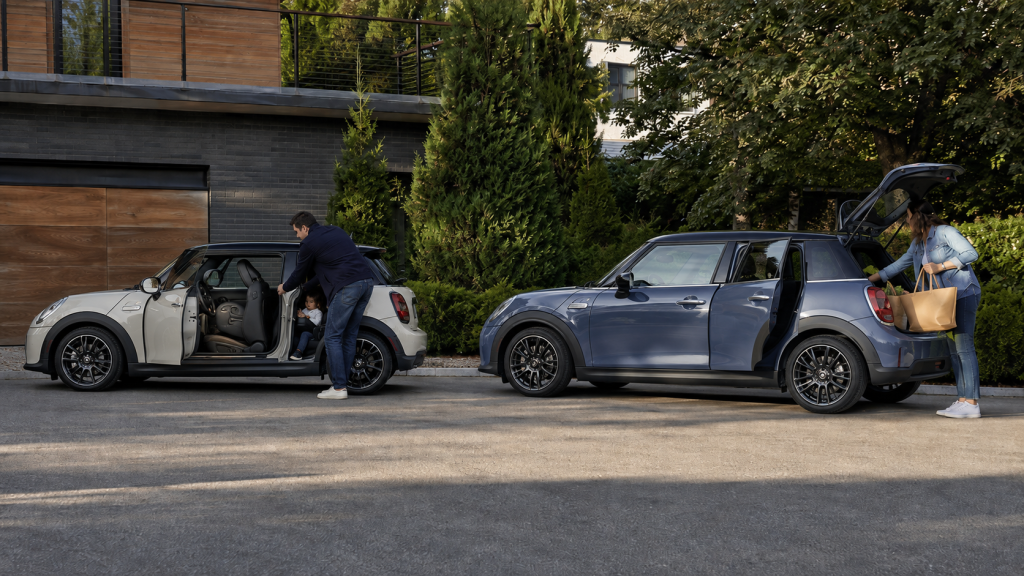
MINI Hardtop 2 Door vs 4 Door choices become clearer when rear access, cargo room, and parking enter the decision. The 2 Door uses front doors for rear entry. By contrast, the 4 Door adds separate rear doors. Therefore, the first choice should reflect how frequently someone uses the second row. Both current Cooper body styles keep a compact footprint and familiar MINI proportions. However, the extra doors change passenger entry and cargo room. The 2 Door stays shorter overall. In addition, the 4 Door adds rear legroom and more cargo space behind the seats. Start With Rear Seat Access How frequently will someone use the rear seats? MINI Hardtop 2 Door vs 4 Door access changes how each passenger reaches the second row. Frequent second row entry favors the Cooper 4 Door because each row has direct door access. The Cooper 2 Door still includes rear seating, but passengers enter after a front seat moves forward. That extra step may matter little when the rear seats stay empty most days. However, regular adult passengers can make separate rear doors easier to use. Families using child seats may also prefer direct access to the second row. The Cooper 4 Door gives rear passengers their own entry points. Therefore, nobody needs to move a front seat before entering the back. In addition, bags and small items can reach the rear floor without disturbing front occupants. The Cooper 2 Door keeps a simpler two door layout. Therefore, it can suit a driver who rarely carries rear passengers. Its shorter body can also leave more room in tight parking spaces. Rear Passenger Space Changes With the 4 Door Which version gives rear passengers more room? MINI Hardtop 2 Door vs 4 Door rear space favors the 4 Door for legroom. The Cooper 4 Door adds 1.5 inches of rear legroom beyond the 2 Door. That increase works with the separate rear doors to make second row entry less involved. Rear space should still be checked with the front seat set correctly. Therefore, place the driver's seat first, then sit behind it. Check knee room, foot space, head clearance, and door opening size. Adults who ride in back several times each week may notice those details quickly. However, occasional rear passengers may not make them a deciding factor. A household should judge passenger frequency before choosing more doors. Child seat access deserves the same review. In addition, parents should check the door opening and space around the installed seat. Buckling a child through a rear door takes fewer steps than moving a front seat first. Cargo Needs Can Change the Choice What needs to fit behind the rear seats? MINI Hardtop 2 Door vs 4 Door cargo figures show a clear size difference. The Cooper 2 Door lists 8.9 cubic feet of cargo room. The Cooper 4 Door lists 13.1 cubic feet behind its rear seats. Therefore, the 4 Door gives you more room while keeping every passenger seat available. The difference grows when the rear seats fold. MINI lists up to 40 cubic feet in the 4 Door with them folded. However, folded seats remove passenger positions, so maximum cargo volume does not answer every loading question. A useful test starts with the items you carry each week. Groceries, backpacks, luggage, pet supplies, and work bags all use space differently. Therefore, the hatch opening and floor shape deserve attention along with the published number. Current Size and Cargo Comparison Measurement Cooper 2 Door Cooper 4 Door Overall length 152.6 inches 158.9 inches Width including mirrors 77.6 inches 77.6 inches Cargo behind rear seats 8.9 cubic feet 13.1 cubic feet Cargo with rear seats folded Check current configuration Up to 40 cubic feet Rear access Through front doors Separate rear doors Rear legroom Standard 2 Door layout 1.5 additional inches These figures show where the two body styles separate most clearly. Therefore, passenger access and cargo room should carry more weight than door count alone. Parking Space Favors the Shorter 2 Door Does 6.3 inches of added length matter where you park? MINI Hardtop 2 Door vs 4 Door length differs by 6.3 inches. It can matter in a short garage or tight curbside space. The Cooper 2 Door measures 152.6 inches long. The Cooper 4 Door measures 158.9 inches. Both list the same 77.6 inch width including mirrors. Therefore, the clearer parking difference comes from length, not listed mirror width. The shorter body can leave more room around a garage door or storage shelf. In addition, the shorter Cooper can make close curbside spaces easier to judge. The 4 Door remains compact, but its extra length supports more rear room and cargo space. Parking should be tested with the exact space you use most. Therefore, note garage depth, driveway layout, and common parking locations. A side by side drive can make the length difference easier to judge than numbers alone. Match Each Body Style to Your Household Routine Which body style fits your week? MINI Hardtop 2 Door vs 4 Door decisions should reflect passenger and cargo frequency. A commuter who drives alone may place more weight on the shorter 2 Door. By contrast, a couple with regular rear passengers may prefer the 4 Door. Separate rear doors remove the need to move a front seat. In addition, the larger rear cargo area can keep more items behind the seats. A household with children may care most about second row access. Someone carrying groceries and work gear together may care more about cargo room. Therefore, the right test should copy the tasks that happen every week. Use these scenarios as a starting point: The 2 Door can suit drivers who rarely use rear seats and value the shortest footprint. The 4 Door can suit households that use the second row several times each week. The 4 Door can suit shoppers who need more cargo room without folding the rear seats. These examples should narrow the choice, not replace a physical test. Therefore, bring common bags or child seat measurements when you compare both cars. Compare Both MINI Cooper Body Styles in Jacksonville What should you test before choosing? MINI Hardtop 2 Door vs 4 Door testing should start with rear entry and cargo loading. Those checks reveal clear structural differences between the Cooper 2 Door and Cooper 4 Door. Tom Bush MINI in Jacksonville carries current 2 Door and 4 Door inventory for direct comparison. Therefore, you can move between them while the differences are fresh. Current inventory also lets you compare the exact trim and equipment you may purchase. Before the drive, check these items: Open the rear seating area and use the entry path you expect to use most. Load a common bag, stroller, or other regular cargo item through each hatch. Park both cars and compare front clearance, rear clearance, and door access. In addition, set the front seat to your normal position before checking rear room. That keeps the passenger comparison fair. Then drive both on roads similar to the routes you use most. MINI Hardtop 2 Door vs 4 Door choices become easier when you test the spaces you will use every week. Therefore, choose the layout that fits your passengers, cargo, and parking routine.